Comparing French and Italian Bread Baking Techniques at Home
Baking bread at home offers an opportunity to explore the nuances of different regional techniques. French baguettes and Italian ciabatta are two iconic loaves that, while both rooted in European baking traditions, require distinct approaches in terms of hydration, fermentation, and handling. Understanding these differences can help home bakers adapt their methods to achieve the characteristic textures and aromas of each bread.
The baguette is known for its crisp crust, soft crumb, and relatively simple formula of flour, water, yeast, and salt. Ciabatta, by contrast, features a more open crumb structure with large irregular holes, a chewy texture, and a slightly tangy flavor profile. These differences are not accidental; they result from deliberate variations in hydration levels, fermentation schedules, and shaping techniques. By examining each step of the process, home bakers can gain a clearer picture of how to approach both styles in a domestic kitchen.
This article provides a neutral, method-focused comparison of the two breads, emphasizing the factors that influence crumb development and overall structure. The goal is not to declare one superior but to offer a framework for understanding how each technique contributes to the final loaf.
Hydration Levels and Their Impact on Dough Behavior
Hydration refers to the ratio of water to flour in a dough, expressed as a percentage. French baguette dough typically has a hydration level between 65% and 70%, meaning for every 100 grams of flour, 65 to 70 grams of water are used. This moderate hydration yields a dough that is firm enough to shape easily yet still moist enough to produce a light crumb. At this hydration, the dough remains manageable by hand or with minimal bench scraping, and it holds its shape well during proofing.
Italian ciabatta, on the other hand, often uses a hydration level of 75% to 80% or even higher. The extra water creates a very slack, sticky dough that requires careful handling. High hydration promotes greater gluten development and allows the dough to trap more gas during fermentation. This contributes to the large, irregular holes characteristic of ciabatta. However, working with such a wet dough at home demands patience and specific techniques, such as using wet hands or a dough scraper to avoid sticking.
The difference in hydration directly affects crumb structure. Baguette dough, with lower hydration, produces a finer, more uniform crumb with small to medium alveoli. The dough’s firmness helps the crumb retain a soft, tender quality. Ciabatta’s high hydration, combined with minimal handling, encourages an open, airy crumb with pockets of varying sizes. The water content also influences the final texture: baguettes tend to be slightly drier inside, while ciabatta remains moist and chewy for longer after baking.
Fermentation Time and Prefermentation Choices
Fermentation plays a crucial role in developing flavor and structure. For baguettes, the process often involves a relatively short bulk fermentation, ranging from two to four hours at room temperature, followed by a cold retardation overnight or a shorter final proof. Many bakers use a poolish — a wet preferment made with equal parts flour and water and a small amount of yeast — to add complexity. The poolish ferments for 12 to 16 hours before being incorporated into the final dough. This method gives baguettes a mild, slightly nutty flavor without overpowering acidity.
Ciabatta frequently employs a biga, which is a stiff preferment with a hydration of around 50% to 60%. The biga ferments for 12 to 24 hours, developing a more pronounced tang and enhancing the dough’s extensibility. After mixing the final dough, the bulk fermentation for ciabatta is typically longer than for baguette — often three to five hours at room temperature, with several folds during the first two hours. These folds strengthen the gluten network and redistribute gas, which is essential for supporting the high hydration.
The extended fermentation time for ciabatta allows enzymes to break down more complex sugars, contributing to a deeper flavor and a darker crust when baked. Baguette fermentation, while shorter, still benefits from temperature control and careful timing. A slower fermentation at cooler temperatures can improve flavor in both breads, but the baguette’s schedule remains more compressed compared to ciabatta’s leisurely pace. Home bakers may need to plan ahead when making ciabatta, as the preferment and bulk fermentation together can span more than 24 hours.
Shaping Techniques and Their Effect on Gas Retention
Shaping is where the contrast between baguette and ciabatta becomes most evident. A baguette is shaped by folding the dough into a tight cylinder, then rolling it under slight tension to create an elongated log. The goal is to create a taut outer skin that directs oven spring and produces the classic slashed crust. The shaping process compresses the dough moderately, retaining a controlled amount of gas while ensuring an even crumb. Overworking the dough at this stage can deflate it, leading to a denser result.
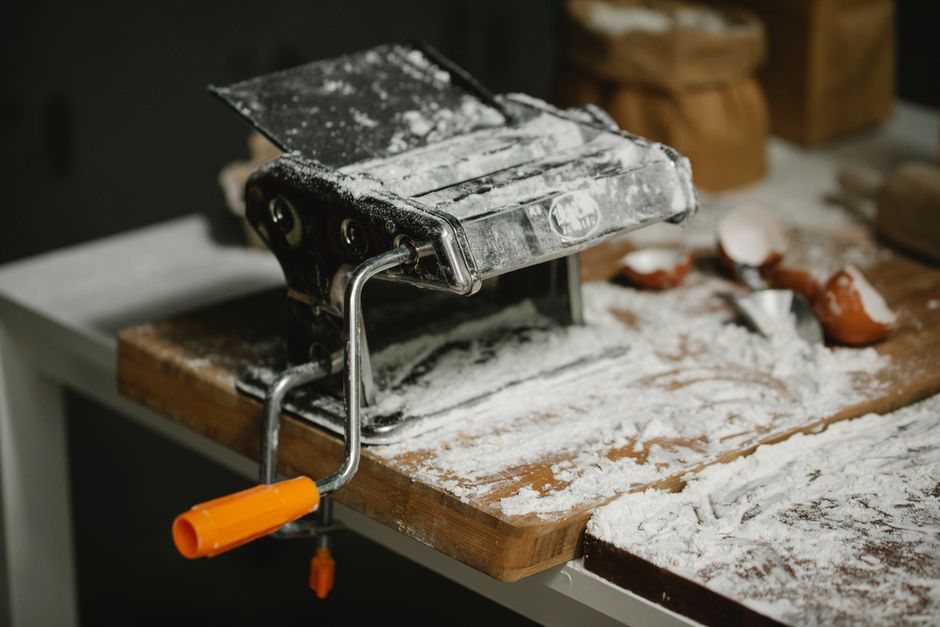
Ciabatta shaping is far more gentle. After bulk fermentation, the dough is turned out onto a heavily floured surface and divided into rectangles with a bench scraper. Rather than rolling or pressing, the baker simply folds the edges inward or cuts the dough without much manipulation. The objective is to preserve as much gas as possible, which supports the open crumb structure. Some bakers skip shaping entirely and pour the dough directly into a floured proofing basket. Minimal handling also prevents the gluten network from becoming too tight, which would inhibit the irregular expansion desired in ciabatta.
The difference in shaping techniques directly influences the final crumb. Baguette’s tighter shaping yields a more consistent internal structure, while ciabatta’s loose approach results in a chaotic distribution of large and small holes. For home bakers, practice with wet dough handling is essential for ciabatta, as sticky dough can be frustrating. Using a liberal dusting of rice flour or coarse semolina can help prevent sticking during the final proof and transfer to the oven. Baguette shaping, while requiring some skill to achieve a uniform taper, is generally more forgiving at lower hydration.
Baking Conditions: Steam, Temperature, and Crust Development
The baking environment further separates these two breads. Baguettes benefit from high heat, typically around 475°F (245°C), and the introduction of steam during the first ten minutes. Steam keeps the crust soft and allows maximum oven spring, then evaporates to let the crust crisp and brown. The resulting crust is thin, brittle, and shatters when bitten. Home bakers can create steam by placing a pan of water on the oven floor or by spraying the loaf just after loading.
Ciabatta also requires steam for a crisp exterior, but the baking temperature is often slightly lower — around 450°F (230°C) — to allow the thick crust to develop without burning the flour coating. Because ciabatta has more moisture inside, the baking time may be longer to ensure the crumb is fully set. Some recipes recommend reducing the temperature after the initial burst of steam to promote even cooking. The crust of ciabatta tends to be thicker and more rustic, often covered with a generous dusting of flour that creates a matte finish.
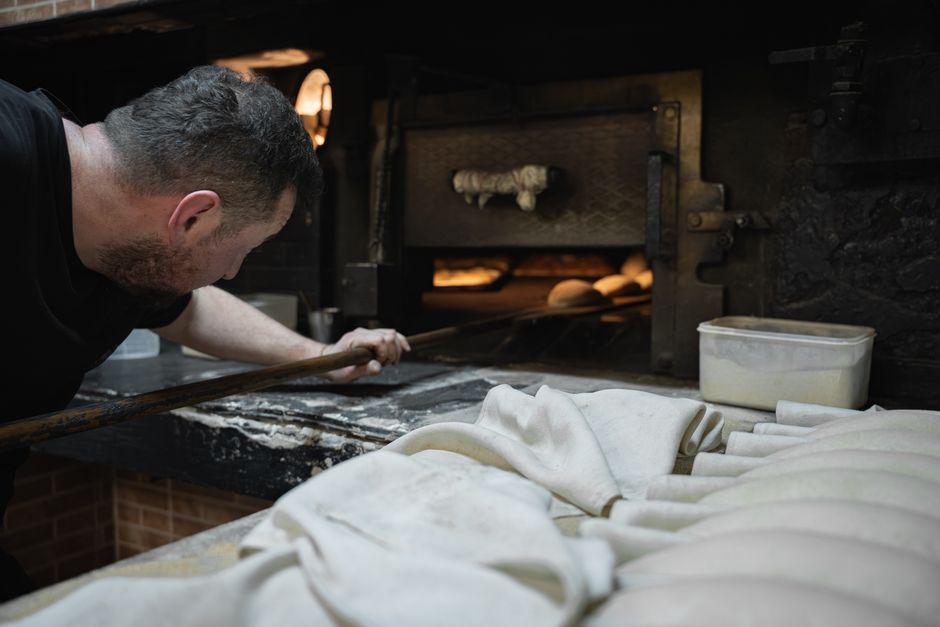
The interaction between hydration, shaping, and baking environment means that similar equipment can produce different outcomes. A baking stone or steel helps both breads by transferring heat efficiently, but the baguette’s narrow shape requires careful loading, while ciabatta’s slab-like form is easier to slide onto a hot surface. Home bakers should adjust their oven setup based on the loaf type, paying attention to steam venting and heat distribution for consistent results.
Choosing a Technique Based on Time and Equipment
Deciding whether to bake a baguette or ciabatta at home often comes down to available time, skill level, and kitchen equipment. Baguettes are well-suited for bakers with limited time who still want a classic crusty loaf. The preferment can be made the night before, and the shaping and proofing fit into a single morning. The dough is relatively easy to handle, and the final scoring step adds a satisfying visual element.
Ciabatta rewards a longer, more relaxed schedule. The high hydration and extended fermentation demand patience and a willingness to work with sticky dough. However, the results can be striking for those who enjoy watching a slack dough transform into an airy bread. Home bakers without a professional steam injection system can still achieve acceptable results using a cast iron Dutch oven for ciabatta, though the loaf shape may differ. Baguettes are more forgiving in a standard oven setup as long as steam is introduced early.
Ultimately, both techniques offer valuable lessons in dough science. The baguette emphasizes precision in shaping and timing, while ciabatta highlights the role of hydration and gentle handling. By experimenting with each method, home bakers can develop a deeper understanding of how fermentation, water content, and manipulation affect the final bread. There is no single correct approach; contextual factors such as flour type, ambient temperature, and personal preference will always influence the outcome.